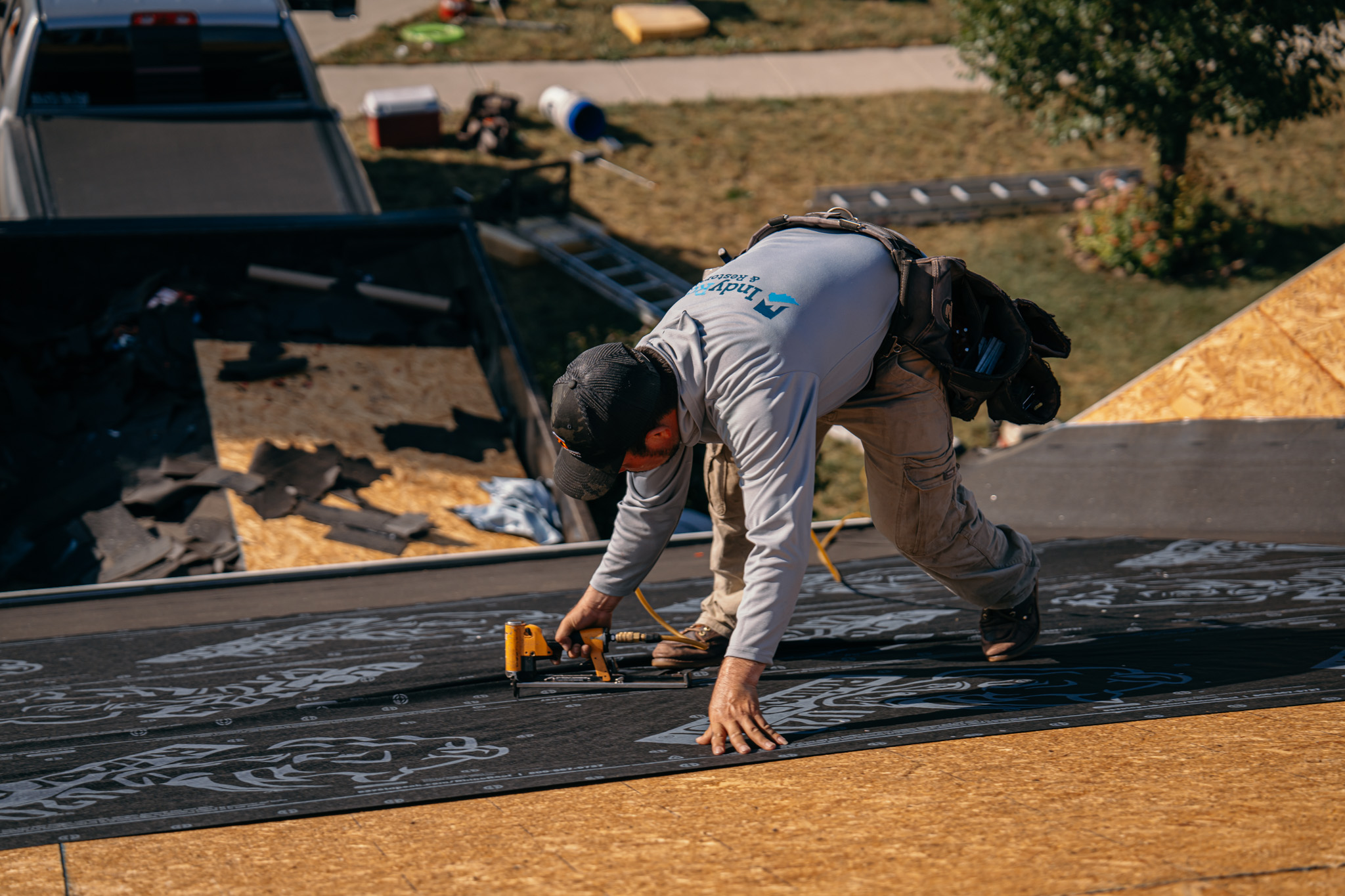
Problem: A Active Leak Is Dripping Inside Right Now
An active leak during rain is the most urgent call we get in Imperial Hills. Water finds the path of least resistance, which means the drip in your living room may be ten feet from the actual roof breach. Insulation soaks, drywall sags, and within a day or two the conditions for mold are already in place.
Solution: Stabilize First, Diagnose Second
Our first job on an active leak is to stop more water from entering. That usually means an emergency tarp or temporary dry in over the suspected area. Once the weather breaks, we trace the leak back to its origin, which is often a failed flashing, a cracked boot around a plumbing vent, or a nail pop that lifted a shingle. For ceiling damage that is already showing, our guide on attic water damage from roof leaks walks through what happens above the drywall. Severity is assessed over the phone so we know what equipment to bring, and tarping is prioritized for homes with active water entry.
While you wait for the Imperial Hills Metal Roofing crew to arrive, there are a few small steps that limit interior damage. Move furniture and rugs out of the drip zone, lay down a bucket with a towel inside to muffle the splash, and if the ceiling is bulging from trapped water, puncture the low point with a screwdriver to release it into a container. A controlled release prevents the drywall from collapsing in a single mess across the floor.
Problem: Storm or Wind Damage After a Front Moves Through
Imperial Hills gets the full mix: summer thunderstorms, straight line winds, hail in spring, and ice in winter. After a storm, you may see shingle granules in the gutters, lifted tabs along a ridge, or bruised spots where hail hit.
Solution: Document, Inspect, Then Repair
Storm repairs run on a different track because insurance is usually involved. We document conditions with photos before we touch anything, give you a written scope, and coordinate with your adjuster when needed. Common repairs include replacing wind lifted shingles, resealing ridge caps, and swapping hail damaged vents. If the damage is widespread, we will say so honestly rather than patching a roof that needs replacement.
Two things matter for a clean claim. First, do not climb up and start pulling shingles loose to see what is underneath, since that can complicate the adjuster's assessment. Second, hold onto every piece of paper, including the date of loss, photos from the ground, and any debris you collected from the yard. Imperial Hills Metal Roofing has sat through hundreds of adjuster meetings in Imperial Hills, and the homeowners who keep good records consistently get fairer settlements than those who do not.
Problem: Flashing, Boots, and Penetrations Are Failing
Most leaks we find are not through the shingle field. They come from the spots where the roof meets something else: a chimney, a sidewall, a plumbing vent, a skylight. Rubber boots crack after about 10 to 15 years in our sun. Step flashing rusts or pulls loose. Sealant at the chimney hardens and splits.
Solution: Replace the Component, Not Just the Caulk
Smearing fresh sealant over a failed boot buys you a season at most. We replace the boot with a new collar, re tie the flashing into the courses of shingles, and use proper underlayment laps. This is the kind of targeted repair that pays for itself many times over.
When we are already on the roof for one failed penetration, we check every other one too. If one plumbing boot has cracked from UV exposure, the others on the same slope are usually close behind. Replacing them all in a single visit costs far less than three separate service calls spread over two years, and it gives you a clean baseline to work from.
Problem: Ice Dams Each Winter
If you see icicles building along the eaves every February, you likely have an attic ventilation or insulation issue pushing warm air into cold roof decking. Melt water refreezes at the edge, backs up under the shingles, and finds its way inside.
Solution: Address the Cause, Not Just the Symptom
We can replace damaged shingles and add ice and water shield to the eave courses, but the long term fix usually involves better attic ventilation and air sealing. Our team will walk you through both. Here are the steps we typically follow:
- Inspect the attic for warm spots and inadequate baffles.
- Repair shingle and underlayment damage at the eaves.
- Recommend ventilation or insulation upgrades when warranted.
Problem: Aging Roofs With No Obvious Failure Yet
Some roofs in Imperial Hills are quietly nearing the end of their service life without a single drip inside. Granules thinning in the gutters, shingle edges curling, and exposed nail heads on flashing are early signals that the roof is closer to failure than it looks from the curb.
Solution: A Maintenance Plan Instead of a Crisis Repair
Imperial Hills Metal Roofing offers scheduled inspections that catch these issues before they become interior damage. A short list of preventive items keeps the roof working through its final years:
- Re seal exposed fasteners and replace cracked boots.
- Clear valleys and gutters of debris that traps moisture.
- Tighten loose ridge caps and replace missing tabs.
Problem: You Are Not Sure If You Need Repair or Replacement
This is one of the most common questions we field. A roof at 12 years with one bad slope is usually a repair. A roof at 22 years with leaks in three places is usually a replacement.
Solution: An Honest Inspection
We offer free inspections and give you a written estimate either way. If a repair makes sense, that is what we quote. If replacement is the better value, we explain why, and our roof replacement cost guide for Imperial Hills covers what to expect. For deeper diagnostics on persistent leaks, leak origin detection versus repair explains the difference between finding the source and just patching the symptom.